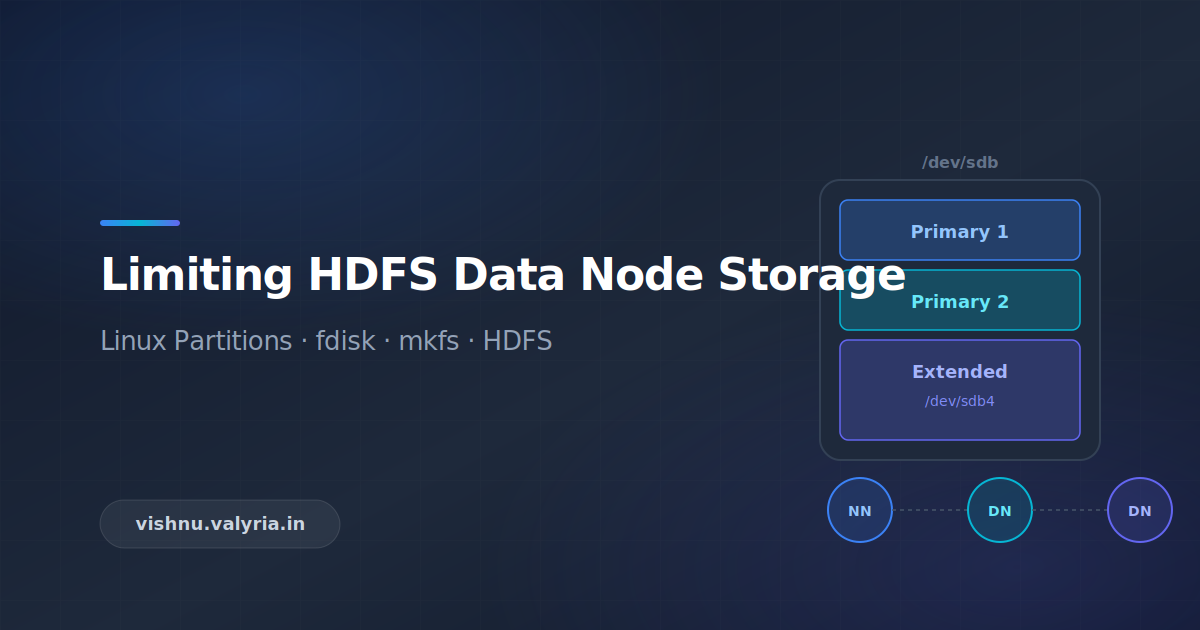
Limiting HDFS Data Node Storage with Linux Partitions
When running an HDFS cluster, you may want to limit how much storage a data node contributes to the cluster. Maybe the node shares disk space with other services, or you want to enforce dynamic storage allocation. The solution combines Linux disk partitioning with HDFS configuration — and this guide walks through it from scratch. What you'll learn * How HDFS clusters work (master, client, and data nodes) * Linux partition types: primary, extended, and logical * Creating, formatting,
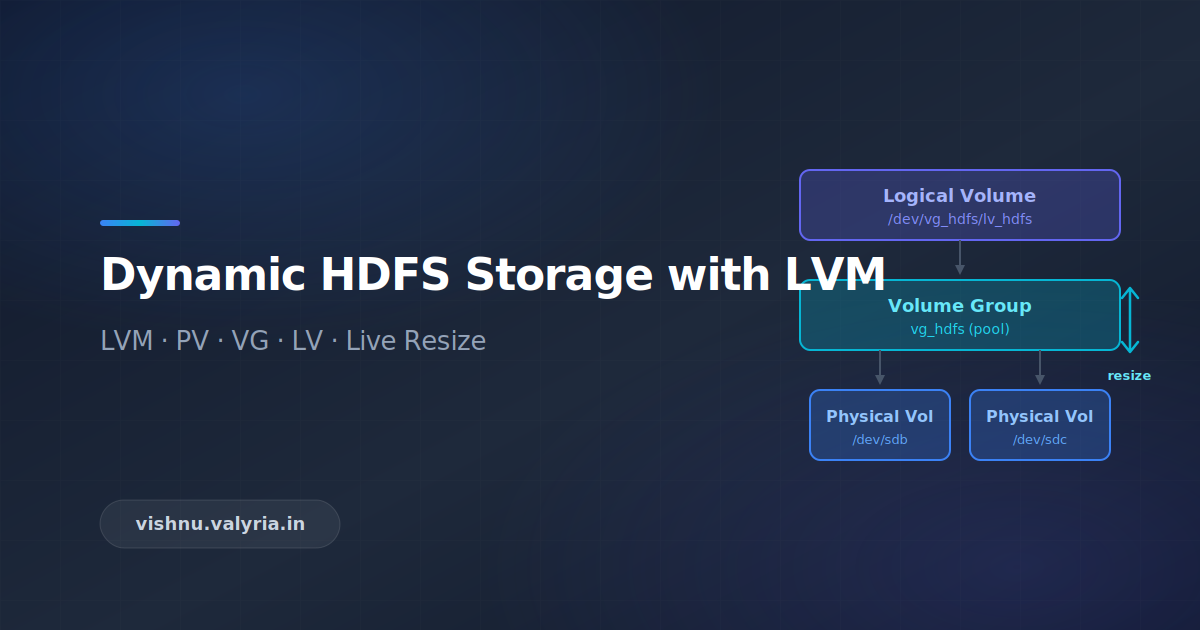
Dynamic HDFS Data Node Storage with LVM
Data grows exponentially — you can't always predict how much storage you'll need next month. Static partitions lock you into fixed sizes, but LVM (Logical Volume Manager) lets you dynamically resize storage on the fly. In this guide, you'll set up a dynamic storage unit for an HDFS data node using LVM, so your cluster can grow without downtime. What you'll learn * Why dynamic storage matters for HDFS clusters * LVM fundamentals: physical volumes, volume groups, logical volumes * Cre
Enjoyed reading about Hadoop?
Subscribe to get notified when new articles on this topic are published.
You'll receive a welcome email with a confirmation link. No spam — unsubscribe anytime.